Understanding the Legal Rights of Tenants in India: A Practical Legal Guide
With rapid urbanisation and rising rental demand, tenancy relationships in India often face disputes related to eviction, rent hikes, and security deposits. Many tenants remain unaware of their statutory protections under Indian tenancy laws. The legal rights of tenants in India ensure that every tenant occupies rented premises with fairness, security, and dignity. This article explains key rights, responsibilities, and legal remedies available to tenants under the Rent Control Acts, the Model Tenancy Act 2021, and judicial precedents.
1. Evolution of Tenancy Law in India
Historically, tenancy law in India developed through state-specific Rent Control Acts designed to balance tenant protection and landlord interests. However, these older laws often discouraged property owners from renting out homes due to rigid rent control provisions.
The Model Tenancy Act 2021, introduced by the Central Government, seeks to modernise the rental framework. It promotes transparency, digital registration of agreements, and fair rent practices across India. The Act aims to encourage rental housing growth while safeguarding both tenant and landlord rights.
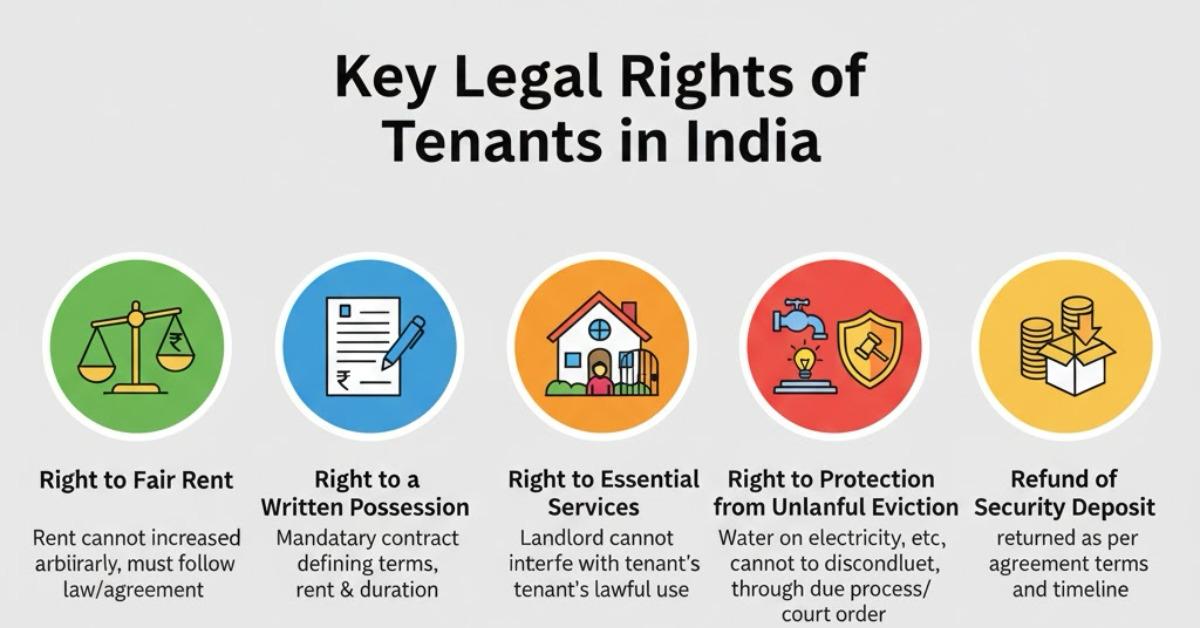
2. Key Legal Rights of Tenants in India
Tenants enjoy several statutory protections to prevent arbitrary eviction or exploitation. The legal rights of tenants in India include:
- Right to Fair Rent: Rent cannot be increased arbitrarily. Any revision must comply with state rent control laws or the tenancy agreement.
- Right to a Written Agreement: A valid tenancy agreement in India must clearly define rent amount, duration, and maintenance obligations.
- Right to Peaceful Possession: Once rent is paid and terms are followed, landlords cannot interfere with a tenant’s peaceful use of the premises.
- Right to Essential Services: Water, electricity, and sanitation cannot be discontinued even during disputes.
- Right to Protection from Unlawful Eviction: A tenant can only be evicted under grounds specified by law and after due process before a competent authority.
- Right to Refund of Security Deposit: The landlord must return the security deposit within the time and conditions agreed under the tenancy contract.
These rights create accountability and promote balanced landlord-tenant relationships.
3. The Model Tenancy Act 2021
The Model Tenancy Act 2021 modernises India’s rental ecosystem and serves as a guiding framework for states. Key provisions include:
- Written Agreements Mandatory: All rental arrangements must be in writing and registered with the Rent Authority.
- Security Deposit Cap: Security deposit is capped at two months’ rent for residential properties and six months for commercial premises.
- Time-Bound Eviction and Recovery: Eviction can only occur on legally valid grounds such as rent default, misuse of property, or subletting without consent.
- Digital Transparency: Landlords and tenants can file and track disputes online through Rent Authority portals.
- Rent Courts and Tribunals: Set up for speedy resolution of landlord-tenant disputes in India.
This framework standardises tenancy management and reduces litigation by promoting transparency.
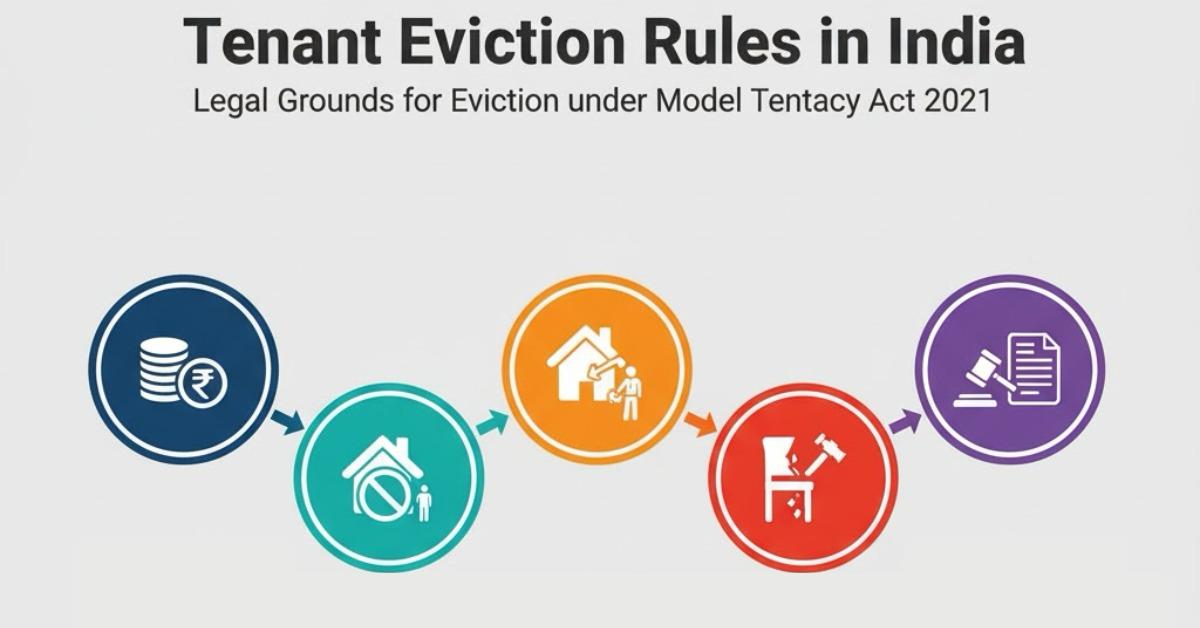
4. Tenant Eviction Rules in India
Eviction is a sensitive issue governed by statutory safeguards. Under most rent control laws in India, eviction is permitted only when:
- The tenant defaults on rent payment.
- The tenant sublets without the landlord’s consent.
- The landlord needs the premises for personal occupation or reconstruction.
- The tenant damages property or misuses it against agreed terms.
Even then, eviction can only proceed through a court order or rent tribunal, ensuring due process and protection against arbitrary removal. Tenants have the right to contest wrongful eviction through appropriate forums.
5. Security Deposit and Rent Control Rules
Security deposit rules in India vary by state, but the Model Tenancy Act introduces uniform limits. Landlords cannot impose excessive deposits or delay refunds after tenancy ends. Rent hikes must also adhere to agreed timelines and statutory notice periods.
Under rent control laws in India, authorities may intervene to fix fair rent based on property condition, locality, and amenities. This prevents landlords from charging exorbitant or discriminatory rents.
6. Legal Remedies for Tenant
When disputes arise, tenants have multiple legal options for redress:
- Consumer Court: For deficiency in housing services or unlawful eviction.
- Rent Authority or Tribunal: For violations of the tenancy agreement, eviction disputes, or unfair rent practices.
- Civil Court: For compensation claims or enforcement of tenancy rights.
- Police Complaint: In case of harassment, forced eviction, or illegal entry.
Tenants may also seek injunctions from civil courts to prevent landlords from disconnecting essential services or unlawfully entering the property.
7. Common Tenant Disputes and Resolution Mechanisms
Typical landlord-tenant disputes in India include rent disagreements, delayed deposit refunds, and interference with possession. To promote amicable resolution, the Model Tenancy Act 2021 encourages mediation before litigation.
Tenants may approach:
- Local Rent Authority or Tribunal for registration and dispute settlement.
- Consumer Helpline (1915) for rental service grievances.
- State Legal Services Authority for free legal aid in genuine hardship cases.
These mechanisms ensure that tenant rights India are protected without unnecessary litigation.
8. Importance of Tenant Awareness in India
Despite progressive laws, tenant protection laws are effective only when individuals understand their rights and obligations. Many tenants still enter verbal agreements without proper documentation, increasing the risk of disputes.
Awareness of tenant eviction rules India, rent caps, and complaint procedures empowers citizens to assert their rights. Landlords, too, benefit from clarity as it reduces uncertainty and fosters mutual trust.
Conclusion
The legal rights of tenants in India reflect a progressive balance between ownership and occupancy. Modern reforms like the Model Tenancy Act 2021 ensure transparency, fairness, and accountability in the rental market.
Tenants must insist on written agreements, adhere to rent terms, and know their remedies under tenant protection laws. As awareness grows, India’s rental ecosystem will evolve toward greater trust, compliance, and equitable housing for all.