Understanding Family and Personal Legal Matters in India: A Practical Guide for Individuals
Legal issues relating to family and personal life affect individuals at different stages of life. Matters such as identity documentation, marriage, adoption, inheritance, separation and family arrangements carry both emotional and legal significance. Understanding family and personal legal matters in India is essential because even minor documentation errors or procedural lapses can lead to long term complications.
Family legal issues India commonly include name change process India, marriage registration India, interfaith marriage India, adoption laws India and child custody laws India. Personal legal issues India may also involve maintenance and alimony India, family partition disputes India and will and estate planning India. These matters often require clarity on procedures, legal rights and documentation.
This blog explains common family and personal legal concerns, the legal processes involved, remedies available and practical steps individuals can take to manage such matters confidently.
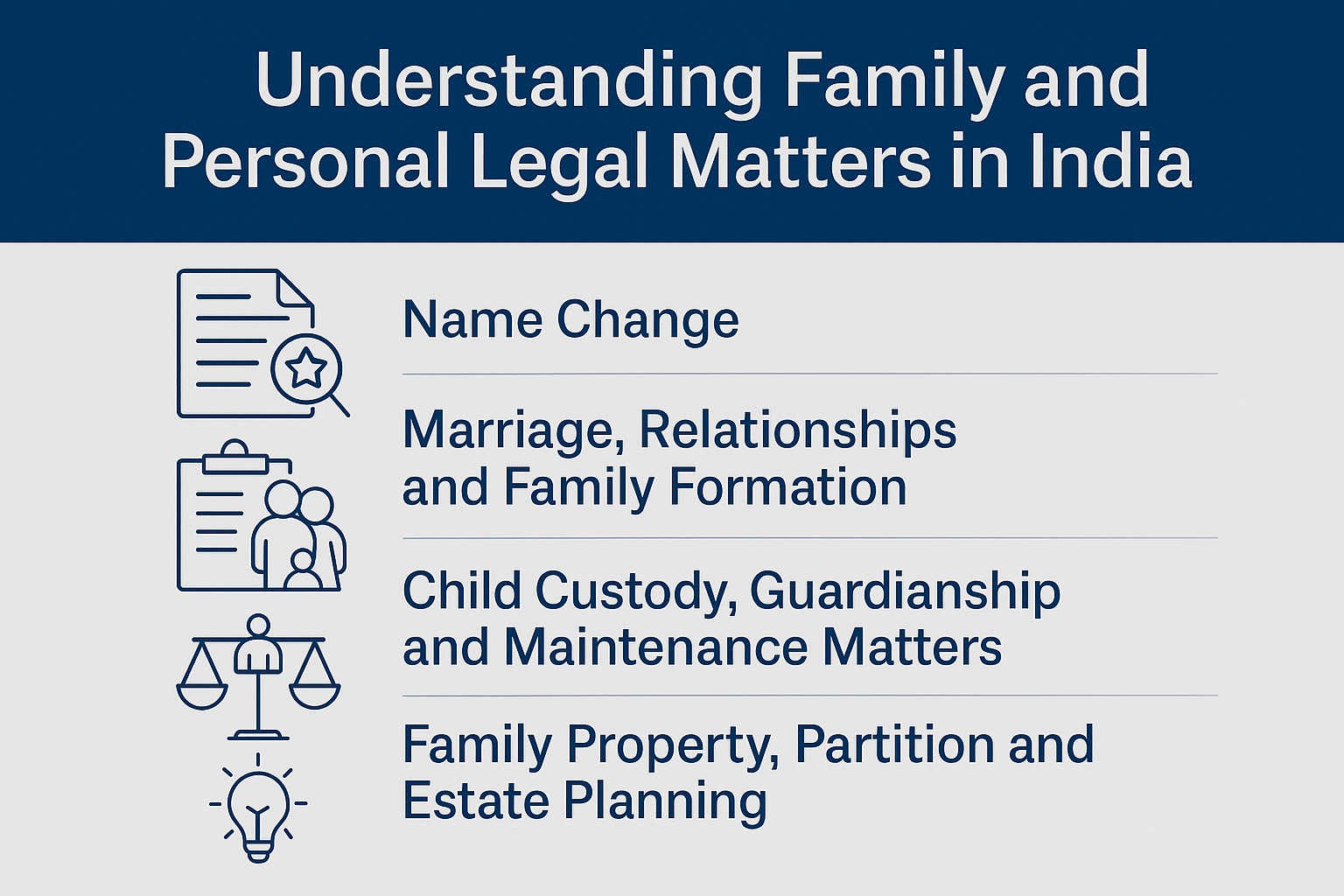
1. Identity, Documentation and Personal Status Issues
Understanding family and personal legal matters in India often begins with identity related concerns. Personal identification documents such as Aadhaar, PAN, passport and voter ID play a critical role in accessing services, financial transactions and legal recognition.
- The name change process India is one of the most common personal legal issues India. Individuals may seek name changes after marriage, divorce, adoption or personal choice. Errors in spelling, mismatch across documents or incomplete procedures often lead to complications. Proper publication, affidavit execution and updating records with authorities are essential.
- Errors in personal documents may affect bank accounts, travel, employment and property transactions. Rectification processes require submission of supporting documents and follow prescribed timelines. Delays may occur if discrepancies are not addressed systematically.
- Change in marital status also requires updating official records. Marriage registration India is essential to establish legal proof of marriage. Unregistered marriages may cause difficulties in visa applications, inheritance, insurance claims and spousal rights.
Understanding family and personal legal matters in India ensures individuals take timely steps to correct documentation and avoid cascading legal issues arising from identity mismatches.
2. Marriage, Relationships and Family Formation
Marriage and family formation raise several legal considerations. Marriage registration India is mandatory in many states and is strongly recommended even where not compulsory. Registration provides legal recognition and protects the rights of spouses.
- Interfaith marriage India often requires additional procedural compliance. Couples may choose to register under specific marriage laws to ensure legal protection. Documentation, notice periods and witness requirements must be followed carefully to avoid delays or objections.
- Adoption is another significant area under family legal issues India. Adoption laws India govern eligibility, consent, documentation and legal procedures. Individuals must comply with statutory requirements to ensure adoption is legally valid and recognised.
- Personal relationship disputes India may arise from misunderstandings, separation or breakdown of relationships. While not all relationship issues require litigation, legal guidance helps individuals understand rights relating to residence, financial support and parental responsibilities.
Understanding family and personal legal matters in India helps individuals make informed decisions when forming families or resolving relationship related concerns.
3. Child Custody, Guardianship and Maintenance Matters
Child related disputes require careful handling due to their sensitive nature. Child custody laws India focus on the welfare and best interests of the child rather than parental claims alone.
Custody issues often arise during separation or divorce. Parents may face confusion regarding physical custody, visitation rights, education decisions and relocation matters. Courts evaluate factors such as emotional well being, stability and caregiving ability.
Guardianship matters may arise where parents are unable to care for a child or where property management is involved. Legal recognition of guardianship ensures protection of the child’s interests.
Maintenance and alimony India are critical personal legal issues India. Maintenance may be sought by spouses, children or dependent parents. Courts assess income, financial capacity, lifestyle and responsibilities while determining maintenance.
Delays or non compliance with maintenance orders often lead to further disputes. Understanding family and personal legal matters in India enables individuals to assert lawful claims while ensuring compliance with legal obligations.
4. Family Property, Partition and Estate Planning
Family legal issues India frequently involve property and inheritance. Family partition disputes India arise when ancestral or jointly owned property is divided among family members. Disagreements may occur regarding shares, possession or valuation.
- Clear documentation and mutual agreements reduce the risk of prolonged disputes. Where amicable settlement is not possible, legal proceedings may be initiated to seek partition or declaration of rights.
- Will and estate planning India is another crucial area. Individuals often delay estate planning, resulting in confusion and disputes after death. A valid will clarifies asset distribution, appoints executors and protects beneficiaries.
- Errors in drafting or lack of witnesses may render wills ineffective. Legal guidance ensures compliance with applicable laws and reduces future conflicts.
- Understanding family and personal legal matters in India empowers families to plan proactively and avoid disputes arising from unclear succession or property arrangements.
Understanding finance, banking, and insolvency disputes in India enables parties to choose the remedy that best protects financial interests and ensures quicker resolution.
5. Practical Guidance for Managing Family and Personal Legal Matters
Understanding family and personal legal matters in India requires proactive planning and documentation. Individuals should maintain updated records of identity documents, marriage certificates, birth certificates and property papers
- For the name change process India, individuals should follow all procedural steps and update records uniformly across authorities. This avoids inconsistencies that may cause future complications.
- Marriage registration India should be completed promptly to establish legal proof. Couples in interfaith marriage India should ensure compliance with applicable notice and registration requirements.
- In adoption laws India and child custody laws India, individuals should seek clarity on eligibility and procedural safeguards to protect children’s welfare.
- Maintenance and alimony India disputes can be reduced through clear financial disclosures and timely compliance with legal orders.
- Families should consider will and estate planning India early to ensure orderly asset distribution. Open communication among family members also reduces misunderstandings and potential family partition disputes India.
- Personal relationship disputes India may benefit from counselling or mediation before escalating to formal legal proceedings.
By staying informed, organised and proactive, individuals can manage family and personal legal matters effectively and reduce emotional and legal stress.
Conclusion
Understanding family and personal legal matters in India is essential for navigating life events involving identity, relationships, children and property. Family legal issues India and personal legal issues India require clarity on procedures, documentation and rights. Matters such as name change, marriage registration, adoption, child custody, maintenance, family partition and estate planning have long term legal consequences.
With proper awareness, timely action and structured planning, individuals can address personal legal concerns confidently and protect their interests and family well being.