Understanding Crypto Laws in India
The Indian cryptocurrency market has grown rapidly over the past decade, attracting both retail investors and institutional players. However, with growth comes legal complexity. Understanding crypto laws in India is essential for anyone trading, investing, or operating in the digital assets space.
India currently does not have a dedicated cryptocurrency legislation, but the legal framework includes the RBI crypto guidelines, taxation rules, and compliance regulations for cryptocurrency exchanges. This guide explains the key aspects of crypto laws in India, covering regulations, taxation, legal status, exchange compliance, and investment laws.
1. Legal Status of Cryptocurrency in India
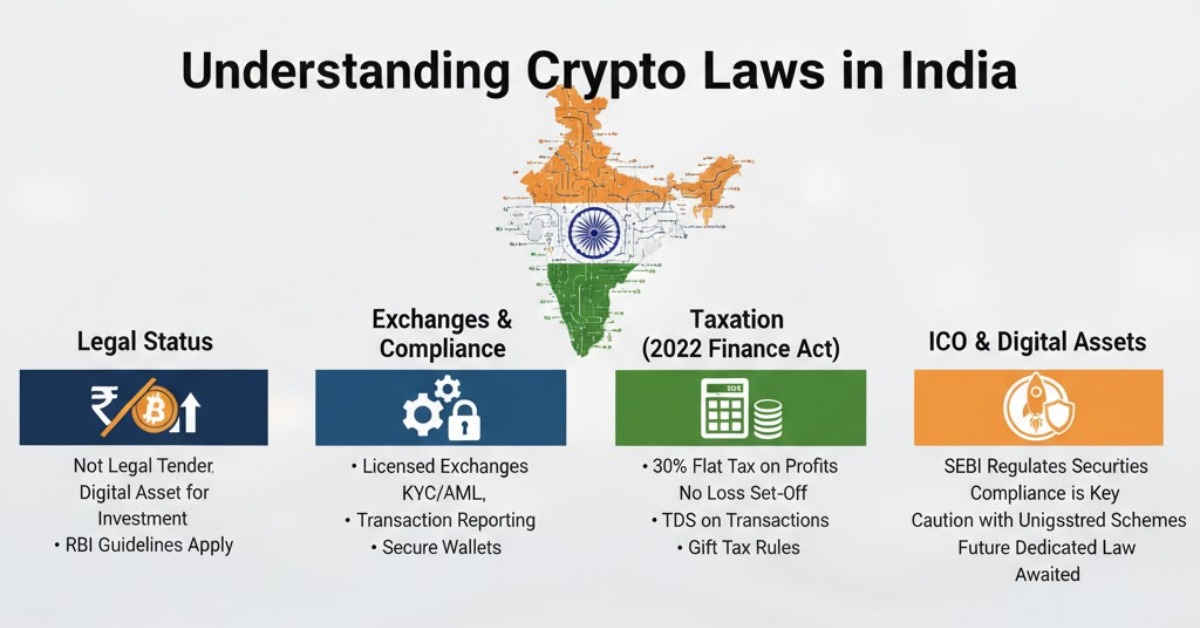
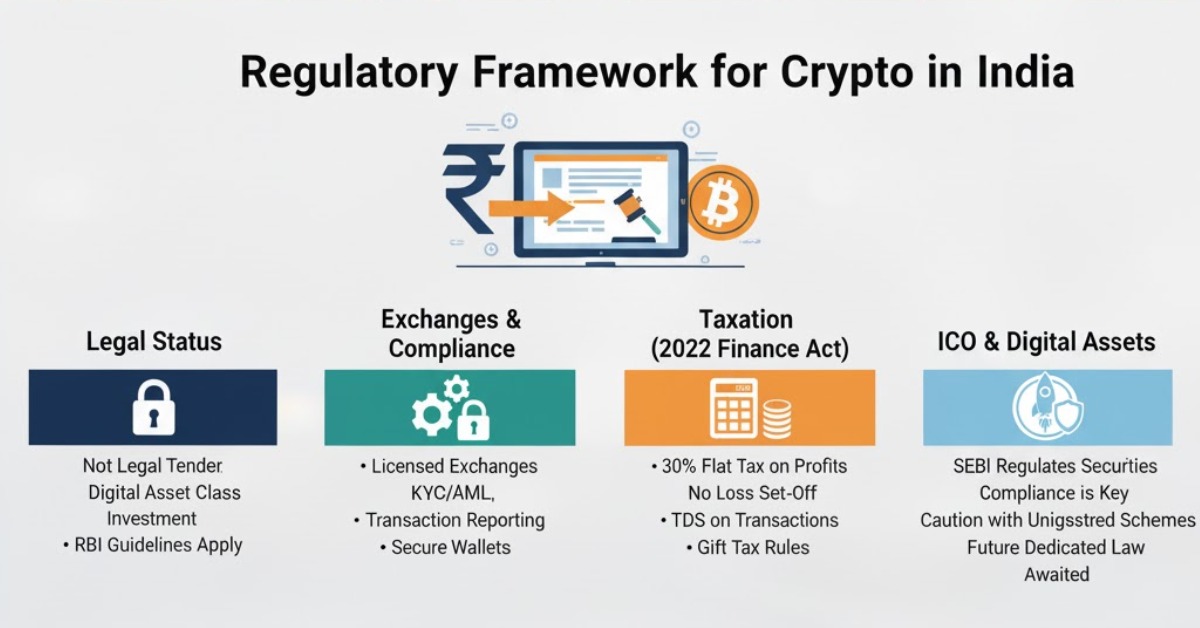
The legal status of crypto in India is defined through government notifications and RBI circulars. Cryptocurrencies such as Bitcoin and Ethereum are not considered legal tender, meaning they cannot be used to settle debts or make official payments.
However, they are recognised as digital assets for investment purposes. The government and regulators have clarified that cryptocurrency transactions are not illegal but are subject to certain restrictions and reporting requirements. Investors must exercise caution when buying, selling, or holding crypto to remain compliant with cryptocurrency regulations India.
2. Cryptocurrency Exchanges and Compliance Rules
All cryptocurrency trading in India is conducted through licensed cryptocurrency exchanges India. Exchanges must follow compliance requirements, including:
- Customer due diligence and KYC/AML verification
- Reporting suspicious transactions to authorities
- Maintaining secure wallets and transaction records
- Following RBI crypto guidelines regarding banking relationships
These rules ensure that exchanges operate transparently and reduce the risk of fraud or money laundering. Understanding cryptocurrency compliance rules is essential for both operators and users to avoid legal penalties.
3. Taxation of Cryptocurrencies in India
Crypto taxation India is governed by provisions introduced in the 2022 Finance Act. Key points include:
- All profits from cryptocurrency transactions are taxed at a flat 30% rate.
- Losses from crypto trading cannot be set off against other income.
- Gifted cryptocurrency is taxable in the hands of the recipient if the value exceeds the threshold.
- Exchanges must deduct TDS on transactions above specified limits.
These taxation rules apply to both retail and professional investors and are an important component of cryptocurrency trading laws in India. Accurate record-keeping and timely reporting are necessary to remain compliant.
4. ICO Regulations and Digital Asset Laws
Initial Coin Offerings (ICOs) and digital asset fundraising are not explicitly banned but are heavily regulated. The Securities and Exchange Board of India (SEBI) oversees any token or asset classified as a security.
Investors and promoters must ensure compliance with applicable regulations to avoid penalties. Understanding digital assets law and ICO regulations India protects participants from investing in unregulated schemes that may be considered illegal.
Additionally, the government is considering a dedicated cryptocurrency and digital assets law to provide clarity on issuance, trading, and taxation, but until then, participants must rely on current RBI, SEBI, and tax guidelines.
5. Key Takeaways and Investor Precautions
Crypto laws in India are evolving, and investors must stay informed to protect their investments. Some practical steps include:
- Verify the legitimacy of cryptocurrency exchanges and wallets before use.
- Maintain detailed records of every transaction for tax purposes.
- Follow all RBI crypto guidelines and cryptocurrency compliance rules strictly.
- Avoid unregistered ICOs or digital asset schemes.
- Stay updated on government announcements or draft laws related to cryptocurrency.
By adhering to these practices, both individual investors and institutions can operate legally while minimising regulatory risk. Understanding crypto laws in India is critical for responsible participation in the rapidly growing digital asset market.
Conclusion
The legal environment for cryptocurrency in India is still evolving, and clarity is gradually emerging through RBI guidelines, taxation provisions, and SEBI notifications. Crypto is not legal tender but is recognised as a digital asset for investment purposes.
Knowledge of cryptocurrency regulations India, compliance requirements for exchanges, taxation laws, and digital asset rules enables investors and operators to act responsibly. Awareness and adherence to crypto laws in India safeguard users against penalties, ensure transparency, and contribute to the healthy growth of the Indian crypto ecosystem.