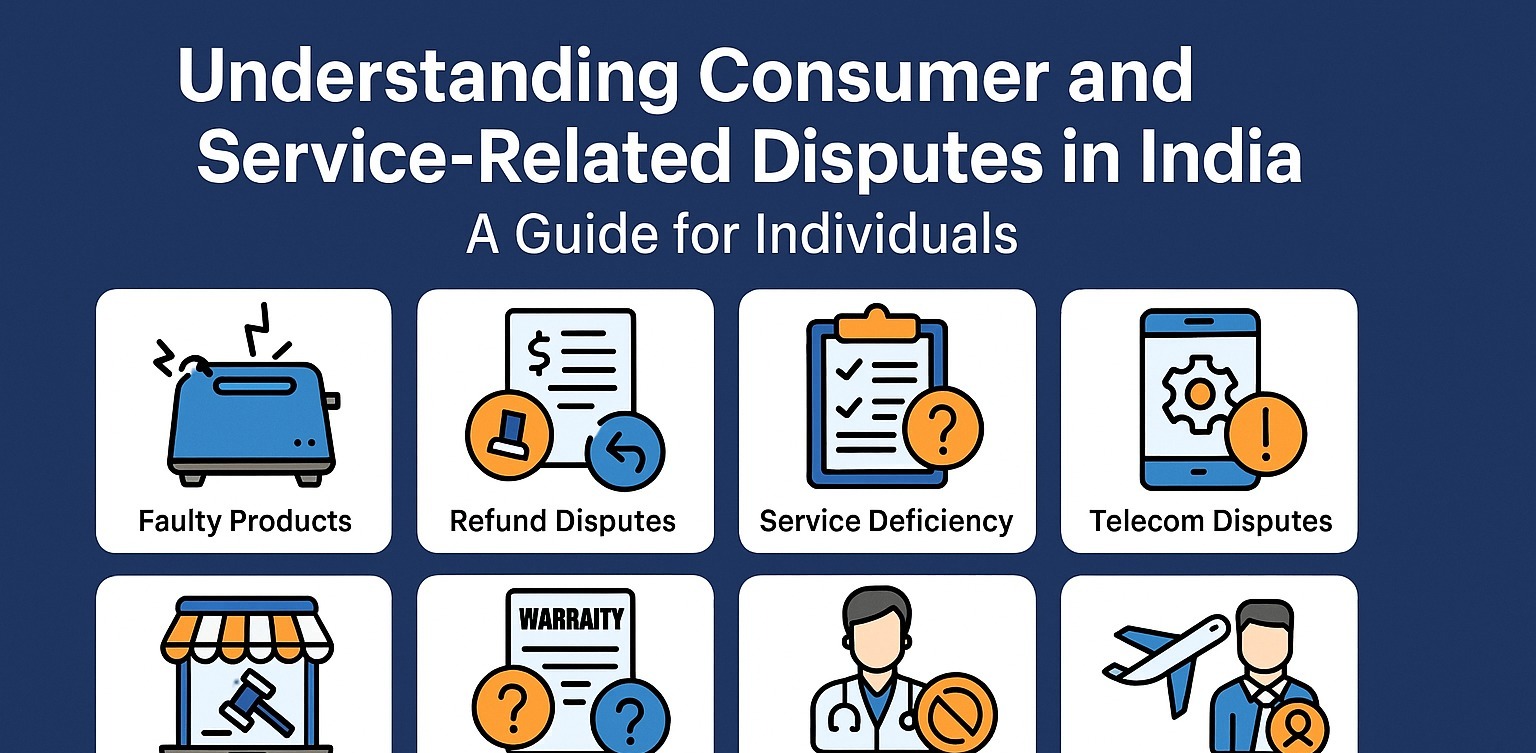
Understanding Consumer and Service-Related Disputes in India: A Guide for Individuals
Everyday consumer transactions form an essential part of modern life. Individuals routinely purchase goods, subscribe to digital services, engage service providers, travel, seek medical treatment and use utilities such as electricity, water and telecom services. While most transactions proceed smoothly, disputes often arise when products are defective, services are delayed or providers fail to meet promised standards. Understanding consumer and service related disputes in India is essential for individuals seeking fair treatment, refunds or compensation.
Consumer disputes India may involve faulty products India, refund disputes India, e commerce disputes India or warranty disputes India. Service related conflicts may arise due to service deficiency disputes, telecom disputes India, utility service disputes India or medical negligence disputes India. With the rise of digital platforms, subscription disputes India and online purchase fraud have also become increasingly common.
This blog explains the nature of consumer and service related disputes, common categories, legal processes, remedies available and practical steps individuals can take to protect their rights.
1. Nature and Causes of Consumer and Service-Related Disputes
Understanding consumer and service related disputes in India begins with recognising why these conflicts occur. Disputes generally arise when there is a mismatch between what was promised and what was delivered. This may involve quality, pricing, timelines, safety or after sales support.
- One major cause is faulty products India, where goods purchased for personal use are defective, unsafe or do not function as advertised. Consumers often face resistance when seeking replacement or refund, leading to refund disputes India.
- Service deficiency disputes arise when personal service providers fail to deliver services with reasonable care and skill. This includes poor workmanship, incomplete services, unreasonable delays or failure to meet contractual obligations.
- Digital commerce has increased e commerce disputes India, including non delivery of orders, delivery of wrong or damaged items, fake listings and payment related fraud. Consumers often struggle to resolve these issues due to automated customer support systems.
- Another common cause is denial of warranty or guarantee claims. Warranty disputes India arise when sellers or manufacturers refuse to repair or replace defective goods despite valid warranty coverage.
- Essential services also contribute to disputes. Telecom disputes India include network failures, unexpected charges, service disruptions or incorrect billing. Utility service disputes India involve electricity or water issues such as overbilling, supply interruptions or incorrect meter readings.
- Disputes also arise in sensitive areas such as healthcare and travel. Medical negligence disputes India involve allegations of improper diagnosis, treatment errors or lack of informed consent. Travel service disputes India include hotel cancellations, denied bookings, poor accommodation quality or tour operator defaults.
Understanding consumer and service related disputes in India requires recognising that these conflicts often arise from power imbalance between individuals and service providers.
2. Common Types of Consumer and Service Disputes in India
Consumer disputes India cover a wide range of situations affecting individuals. Awareness of common categories helps consumers identify appropriate remedies.
- Faulty products India include electronic devices, household appliances, vehicles, furniture and personal goods that malfunction or are unsafe. Consumers may face refusal of replacement or forced repairs.
- Refund disputes India arise when sellers deny refunds despite order cancellation, non delivery or defective products. These disputes are common in online and offline purchases.
- Service deficiency disputes include poor quality services provided by repair technicians, consultants, fitness centres, coaching institutes or home service providers. Failure to perform services as promised often leads to claims for compensation.
- E commerce disputes India involve fraud, fake sellers, misleading advertisements, delayed delivery or partial fulfilment of orders. Consumers may also face difficulty in reaching grievance officers
- Warranty disputes India occur when sellers reject claims citing exclusions, misuse or technical grounds despite legitimate defects.
- Telecom disputes India often involve incorrect billing, data usage disputes, call drops or service termination without notice. Utility service disputes India include wrong billing, delayed connections, faulty meters or supply interruptions in personal homes.
- Medical negligence disputes India arise when healthcare providers fail to meet accepted standards of care, causing injury or harm to patients. These disputes require careful evidence evaluation.
- Travel service disputes India involve airlines, hotels or tour operators failing to provide booked services. Subscription disputes India include difficulties in cancelling memberships, continued billing or hidden charges.
Understanding consumer and service related disputes in India allows individuals to categorise their issue and approach the correct forum.
3. Legal Framework and Dispute Resolution Process
Understanding consumer and service related disputes in India requires knowledge of the legal framework governing them. Consumer disputes India are primarily addressed through consumer protection laws, which recognise the right to quality goods, fair pricing, safety and effective grievance redressal.
Consumers may file complaints before district, state or national consumer forums depending on the value of the claim. The process is designed to be accessible, cost effective and time bound. Complaints must clearly state the deficiency, evidence and relief sought.
For service deficiency disputes, forums evaluate whether the service provider exercised reasonable care and followed accepted standards. In medical negligence disputes India, expert opinions and medical records play a crucial role.
E commerce disputes India often involve both sellers and platform operators. Platforms may be required to facilitate grievance redressal, disclose seller details and cooperate with dispute resolution.
For telecom disputes India and utility service disputes India, individuals may first approach service providers or regulatory grievance mechanisms. If unresolved, consumer forums may be approached.
Travel service disputes India and subscription disputes India are also addressed through consumer forums, particularly when there is unfair trade practice or deficiency of service.
Understanding consumer and service related disputes in India involves recognising that consumers are not required to follow complex civil litigation procedures. The system emphasises consumer friendly resolution.
4. Remedies Available to Consumers in Service-Related Disputes
The law provides multiple remedies to individuals affected by consumer disputes India. Understanding consumer and service related disputes in India includes knowing what reliefs can be sought.
- Consumers may seek refunds, replacement of goods or free repairs in cases involving faulty products India or refund disputes India. Forums may also award compensation for inconvenience, mental agony or financial loss.
- In service deficiency disputes, forums may direct service providers to complete services properly, rectify defects or compensate consumers.
- For e commerce disputes India, relief may include refund of purchase price, compensation for fraud or directions to platforms to improve grievance handling.
- In warranty disputes India, forums may enforce warranty terms and direct manufacturers to honour guarantees.
- Telecom disputes India and utility service disputes India may result in correction of bills, restoration of services, waiver of charges or compensation for service lapses.
- In medical negligence disputes India, compensation may be awarded based on the severity of harm and evidence of negligence. These cases are handled with caution due to their complexity.
- For travel service disputes India, consumers may receive refunds, alternate arrangements or damages for loss of enjoyment. Subscription disputes India may result in cancellation, refund of excess charges and cessation of billing.
Understanding consumer and service related disputes in India empowers individuals to seek meaningful relief rather than accepting unfair treatment.
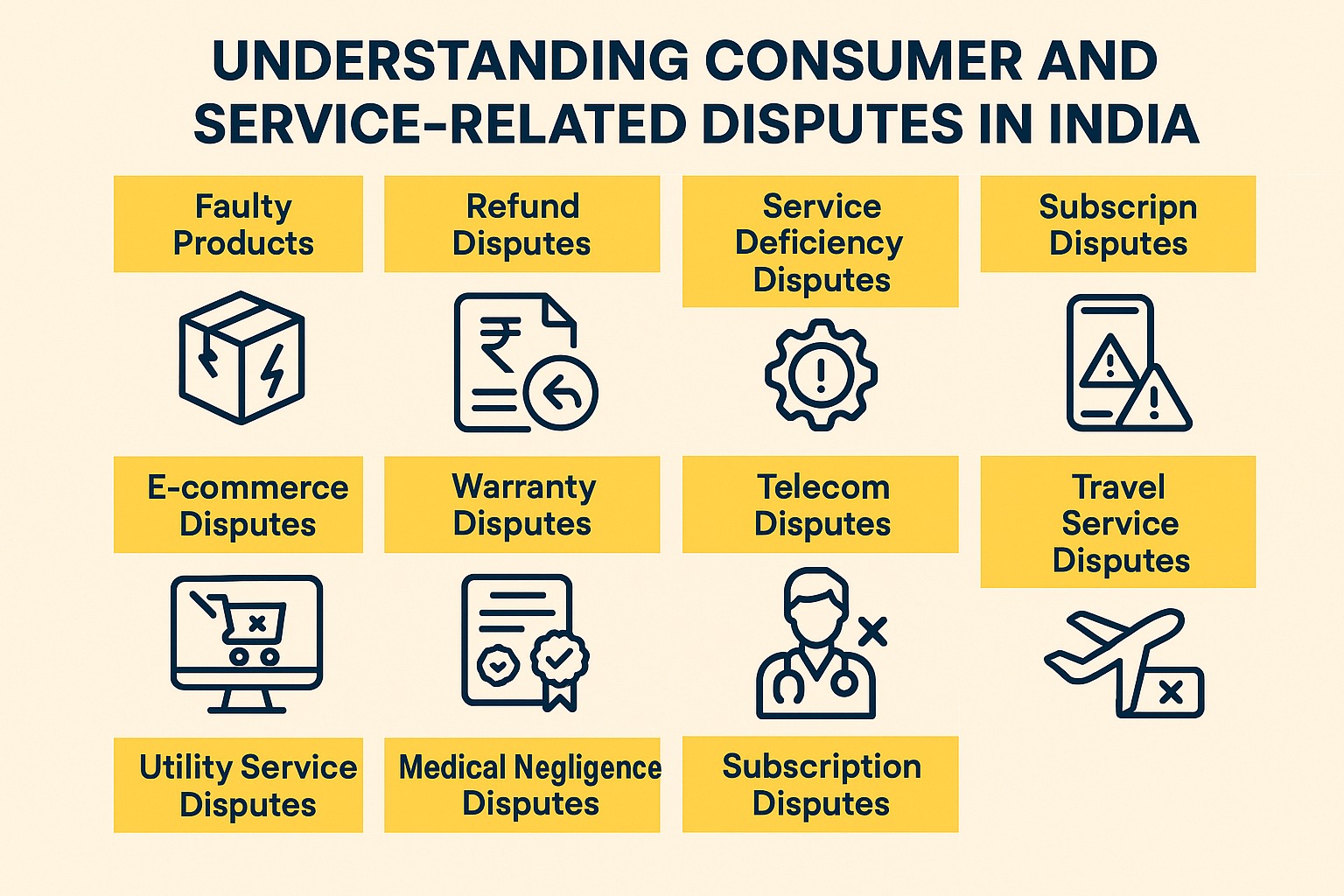
5. Practical Steps to Prevent and Manage Consumer Disputes
Understanding consumer and service related disputes in India is incomplete without focusing on prevention and preparedness. Individuals should retain invoices, receipts, warranties, emails and screenshots of transactions.
- Before purchasing goods or services, consumers should review terms, cancellation policies and warranty conditions. Awareness reduces refund disputes India and warranty disputes India.
- In e commerce transactions, consumers should verify seller ratings and avoid unverified platforms to reduce e commerce disputes India.
- For essential services, consumers should monitor bills regularly to detect errors early and raise complaints promptly, reducing telecom disputes India and utility service disputes India.
- When engaging healthcare providers or travel services, individuals should seek clarity on scope, risks and cancellation terms to avoid medical negligence disputes India and travel service disputes India.
- Subscription services should be reviewed periodically to avoid unwanted renewals and subscription disputes India.
- If disputes arise, consumers should first approach service providers through written complaints. If unresolved, timely filing before consumer forums ensures better outcomes.
Understanding consumer and service related disputes in India enables individuals to assert their rights confidently and navigate the resolution process effectively.
Conclusion
Understanding consumer and service related disputes in India is essential in a marketplace driven by personal consumption and service reliance. Consumer disputes India may involve faulty products, refund denial, service deficiency, billing errors, medical negligence or travel related failures. The legal framework offers accessible remedies that protect individual consumers from unfair practices.
By staying informed, maintaining documentation and acting promptly, individuals can resolve disputes effectively and ensure accountability. Consumer protection laws play a vital role in safeguarding everyday transactions and promoting fair service standards across sectors.