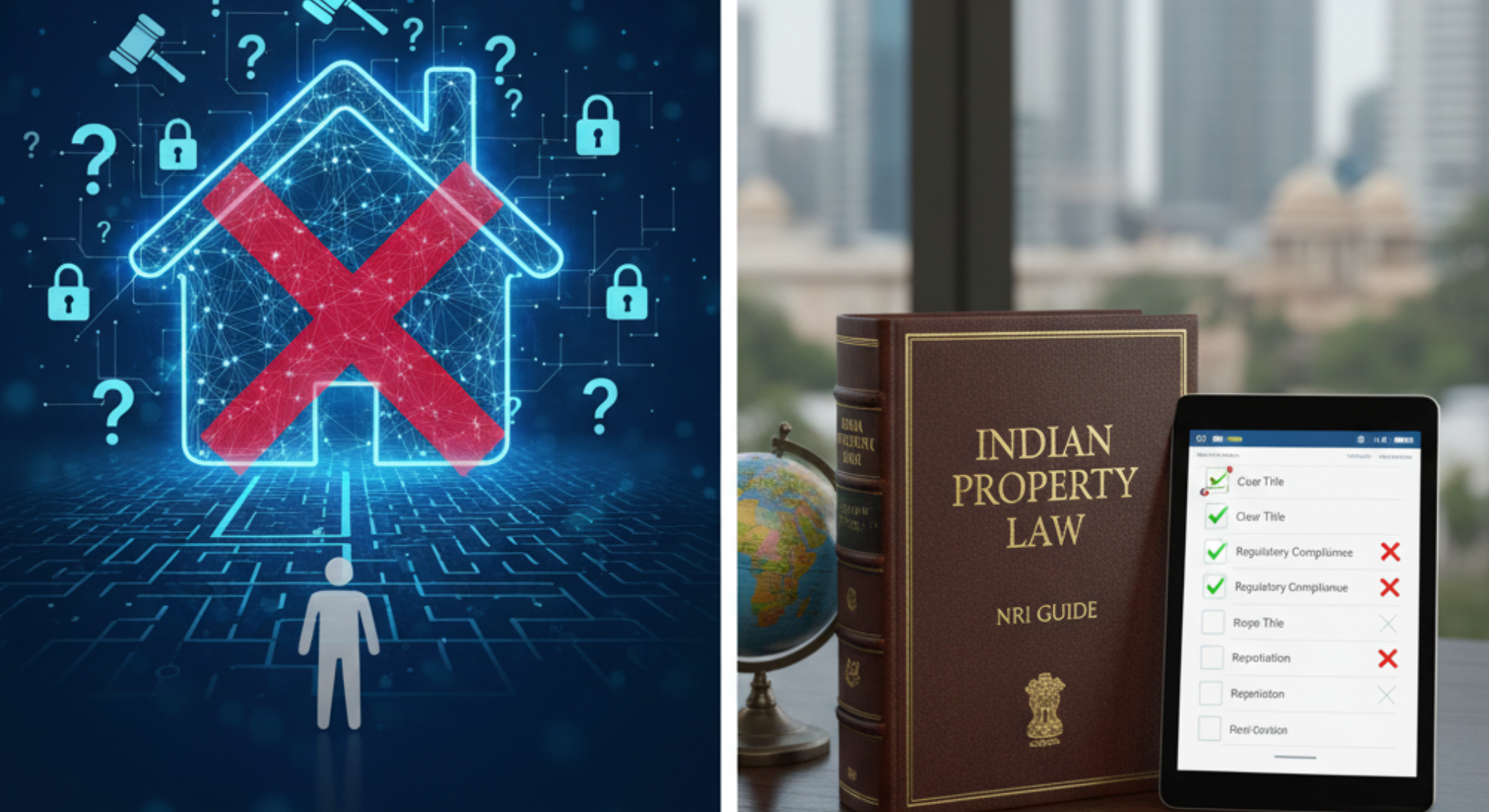
Top Legal Challenges NRIs Face in Indian Property Ownership & How to Overcome Them
Owning property in India is a matter of pride for many Non-Resident Indians (NRIs). Whether it’s inherited ancestral land, an apartment investment, or a commercial property, the emotional and financial value is undeniable. However, with distance comes difficulty. Many NRIs encounter legal challenges while managing, buying, or selling real estate in India.
This article explores the top property-related legal issues NRIs face in 2025 and how to effectively safeguard their investments.
1. Property Fraud and Illegal Possession
One of the most common and concerning issues for NRIs is property fraud. Fraudsters often target unoccupied or unmonitored properties, using fake documents or illegal possession to claim ownership. Unscrupulous tenants or even distant relatives sometimes misuse power of attorney or take possession unlawfully.
Common types of fraud:
- Forged sale deeds or title documents
- Duplicate property registration
- Sale of property without owner’s consent
- False tenancy claims
Legal solutions:
- Conduct regular property audits through a local legal representative.
- Register your property documents with updated ownership details.
- Avoid giving General Power of Attorney (GPA) to non-trusted persons; use a Special Power of Attorney (SPA) with clear limitations.
- Keep a record of all documents and transactions digitally for quick access.
2. Tenant Disputes and Eviction Issues
Managing rental property from abroad can be stressful. Tenants refusing to vacate or not paying rent is a major pain point for NRIs. Legal eviction in India can be time-consuming if not handled properly.
Best practices for NRIs:
- Always sign a registered rental agreement with clear terms — rent amount, duration, and eviction clause.
- Include a jurisdiction clause allowing you to appoint a property manager or lawyer to act on your behalf.
- Prefer short-term renewable leases instead of long-term agreements without review.
- Use professional property management services to monitor and report on-site conditions.
These rights create accountability and promote balanced landlord-tenant relationships.
3. Inheritance and Succession Conflicts
Inheritance is another area where NRIs face serious challenges. If a property is inherited without a clear will, disputes among heirs often arise. Many NRIs discover their inherited properties are locked in family conflicts or lacking clear title documents.
How to avoid inheritance disputes:
- Make or update your Will covering both Indian and overseas assets.
- Obtain a Legal Heir Certificate and mutation of property in your name after inheritance.
- If multiple heirs are involved, execute a family settlement deed legally registered under the Indian Registration Act.
- Consult an NRI property lawyer to handle court verification and mutation process.
4. Repatriation of Sale Proceeds and FEMA Compliance
When NRIs sell their Indian property, repatriating the funds abroad is subject to Foreign Exchange Management Act (FEMA) rules. Many face challenges due to incomplete documentation or lack of awareness about tax implications.
Key rules to remember:
- Funds must be transferred through an NRE or NRO account only.
- NRIs can repatriate sale proceeds of up to two residential properties.
- File the Form 15CA/15CB certificates for tax clearance before repatriation.
- Keep proof of purchase, sale deeds, and tax paid to avoid future litigation.
Failure to comply with FEMA or Income Tax guidelines can result in penalties or frozen funds, so expert consultation is essential.
5. Power of Attorney (PoA) Misuse
A Power of Attorney is a convenient tool for NRIs to authorize someone in India to manage their property. However, misuse is rampant — agents sell or mortgage properties without the owner’s consent.
Precautionary steps:
- Draft a Specific PoA limited to defined tasks such as collecting rent or signing sale deeds.
- Get the PoA attested by the Indian Embassy in your country of residence.
- Register the PoA in India under the Registration Act to ensure authenticity.
- Revoke the PoA immediately after the transaction is completed.
6. Land Disputes and Title Verification
Many NRIs buy land in India without verifying its ownership history. This often leads to encroachment or litigation due to unclear titles, agricultural restrictions, or local land reforms.
Checklist before purchase:
- Verify the title deed, encumbrance certificate, and mutation records.
- Ensure the land is not under litigation or government acquisition.
- Avoid agricultural land purchase unless permitted under state laws.
- Hire a local legal expert for due diligence and site inspection.
7. How NRIs Can Protect Their Property in India
To stay secure, NRIs should adopt a proactive legal strategy:
- Appoint a trusted property lawyer or management firm.
- Maintain all documents digitally and physically.
- Regularly check property tax receipts and encumbrance certificates.
- Keep your PoA updated and limited in scope.
- Register and renew all agreements as per Indian law.
Conclusion
With India’s real estate laws evolving and frauds becoming more sophisticated, NRIs must remain vigilant. Distance is no longer an excuse — digital registration, online verification, and professional property management services make it easier to protect your assets.
A little legal awareness and regular documentation can save NRIs from years of litigation and financial loss. In 2025, safeguarding your property is not just about ownership — it’s about smart legal protection.