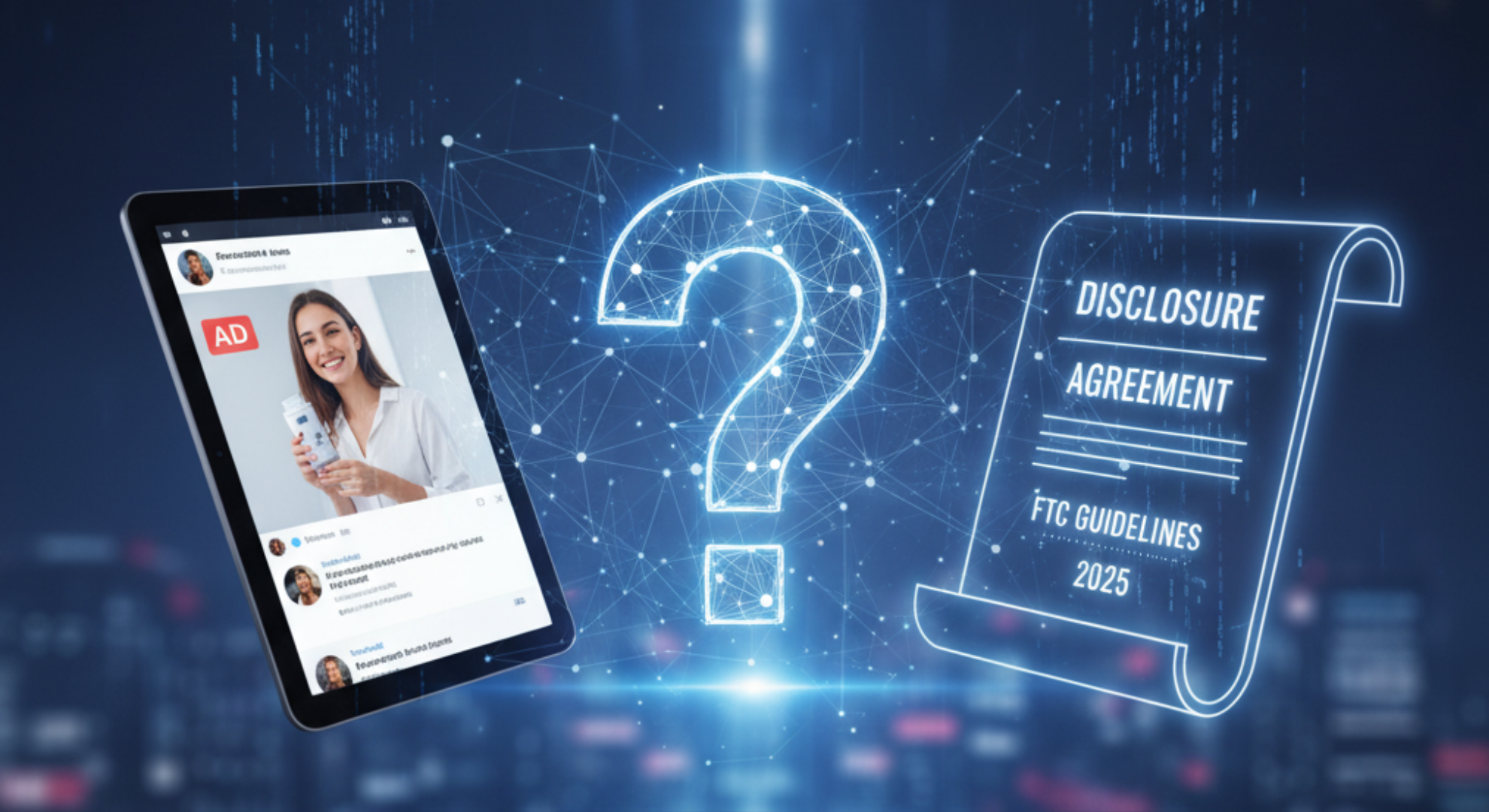
Sponsored Posts & Influencer Disclosures: What Every Creator Must Know in 2025
In 2025, the influencer marketing industry has evolved from an unregulated digital trend to a multi-billion-dollar industry with strict legal obligations. Governments worldwide — from India to the European Union to the United States — are tightening their grip on how influencers promote brands online. Whether you’re an Instagram content creator, YouTuber, or TikTok star, disclosure compliance is now not just a best practice — it’s a legal requirement.
1. The Rise of Influencer Accountability
Influencers now play a massive role in shaping consumer behaviour. A single post can influence millions of purchasing decisions — and regulators know it. To ensure transparency and consumer protection, authorities have implemented clear guidelines for sponsored or paid content.
- In the United States, the Federal Trade Commission (FTC) updated its Endorsement Guides to make it crystal clear that influencers must disclose any material connection with brands — whether it’s a paid partnership, free products, or even affiliate commissions.
- In India, the Advertising Standards Council of India (ASCI) requires creators to label paid partnerships using tags like #ad, #collaboration, or #sponsored.
- Similarly, in the EU and UK, the Digital Services Act and CAP Code demand that influencers make disclosures “clear, upfront, and unambiguous.”
In short: if you’re being compensated — directly or indirectly — you must disclose it.
2. What Counts as a “Sponsored Post”?
A common misconception among creators is that only direct payments count as sponsorships. But legal definitions are broader.
Sponsored content includes:
- Paid collaborations or brand deals
- Free products or experiences received in exchange for mention
- Affiliate links that generate commission
- Gifted items where the brand expects exposure
- Ambassadorships or long-term partnerships
Even if you think a brand “just sent you a free product,” if the company expects visibility or a tag, it qualifies as sponsored. Failing to disclose this can result in regulatory fines, brand termination, or loss of audience trust.
3. How to Disclose Sponsored Content Correctly
Disclosures should be simple, clear, and visible — not hidden in hashtags or lengthy captions. The goal is to make sure the average viewer can immediately recognize a paid promotion.
Best practices for 2025:
- Use clear labels such as #ad, #sponsored, or Paid Partnership with [Brand Name].
- On Instagram Stories or Reels, the disclosure must appear within the first frame and be readable without tapping or pausing.
- On YouTube or podcasts, disclosures must be spoken verbally and displayed on screen.
- On blogs or websites, disclosures should be placed above the fold, not buried at the bottom.
- Avoid vague terms like “thanks to” or “in collaboration with,” unless the paid nature is explicit.
The key principle is transparency: if your audience wouldn’t easily realize it’s an ad, your disclosure isn’t enough.
4. Legal Risks of Non-Disclosure
Ignoring disclosure rules in 2025 is risky. Regulatory bodies are taking strict action against both influencers and brands.
- In 2024, several Indian influencers faced ASCI warnings for promoting financial and health products without proper disclaimers.
- In the UK, influencers like Molly-Mae Hague and others were publicly named for failing to meet disclosure standards.
- The FTC in the U.S. has started penalizing both creators and advertisers for deceptive promotions.
Penalties can include:
- Monetary fines
- Public blacklisting
- Legal notices or lawsuits
- Loss of brand partnership
For influencers who rely on credibility and authenticity, non-compliance can also cause reputational damage that no amount of money can repair.
5. Global Trends Shaping Disclosure Laws
2025 marks a new era where influencer marketing is being treated like mainstream advertising.
Emerging trends include:
- AI disclosure requirements: If you use AI-generated content, deepfakes, or virtual influencers, you must clearly label it as such.
- Cross-border compliance: Global brands now expect influencers to follow the strictest jurisdictional rules to maintain consistency.
- Platform-specific labeling: YouTube, Instagram, and TikTok now offer built-in disclosure tools that automatically display paid partnership tags.
Regulators are also collaborating with tech platforms to automate compliance tracking, making it harder to bypass rules.
6. Building Trust Through Transparency
Beyond legal compliance, transparency builds long-term credibility. Studies show that audiences are more likely to trust influencers who clearly identify paid content. Being open about partnerships doesn’t reduce engagement — it actually enhances authenticity.
Creators who prioritize compliance tend to attract premium brands, retain loyal followers, and protect themselves from reputational crises.
7. Quick Checklist for Influencer Compliance in 2025
Effective consumer grievance redressal is central to enforcement. Consumers may:
- Always disclose any material connection (money, gifts, commissions)
- Use clear, consistent disclosure language
- Keep records of all brand contracts and payment
- Review ASCI, FTC, or EU guidelines regularly
- When unsure — disclose anyway
Conclusion
In 2025, influencer marketing is no longer the “Wild West.” The legal system now treats influencers like professional advertisers — accountable, transparent, and responsible for their audience’s trust.
If you’re a creator, staying updated on sponsored-content disclosure laws isn’t optional — it’s essential. A single overlooked hashtag could cost you not just your deal, but your credibility.