Understanding the Rights of a Consumer in India: A Complete Legal Overview
In an economy driven by goods, services, and digital platforms, protecting the interests of consumers has become essential. Whether purchasing products online or availing financial services, individuals often face issues such as defective goods, unfair trade practices, and misleading advertisements. The rights of a consumer in India safeguard individuals from such exploitation and ensure accountability among businesses. This article explains the scope of the Consumer Protection Act 2019, key consumer rights in India, and how consumers can seek redress through established legal mechanisms.
1. Evolution of Consumer Protection Law in India
The Consumer Protection Act 2019 replaced the earlier 1986 legislation to address emerging issues in e-commerce, product liability, and unfair practices. The 2019 Act modernised consumer protection law India by introducing digital complaint mechanisms, strict liability for defective products, and recognition of online consumer rights in India.
This legal shift ensures that every buyer, whether in physical markets or online spaces, receives fair treatment, accurate information, and a quick path to grievance redressal.
2. Key Rights of a Consumer in India
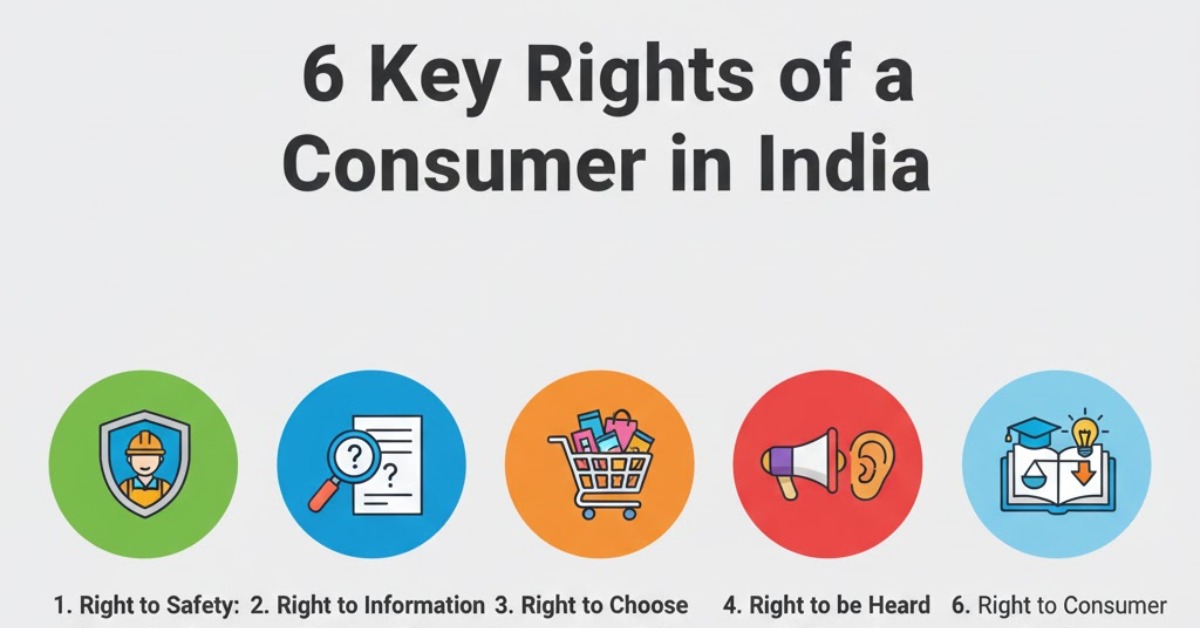
The rights of a consumer in India are derived from the Consumer Protection Act 2019, which grants six fundamental rights:
- Right to Safety: Protects consumers against goods and services hazardous to life or property.
- Right to Information: Ensures full disclosure of product quality, quantity, purity, price, and standard.
- Right to Choose: Enables access to a variety of goods and services at competitive prices.
- Right to be Heard: Guarantees that consumer grievances receive fair consideration.
- Right to Seek Redressal: Empowers consumers to claim compensation for unfair trade practices, defective goods, or deficient services.
- Right to Consumer Education: Promotes consumer awareness in India to help individuals make informed choices.
These legal rights of consumers empower citizens to hold sellers, manufacturers, and service providers accountable.
3. The Role of the Consumer Protection Act 2019
The Consumer Protection Act 2019 is the central framework that governs all consumer rights in India. It extends its scope to include digital transactions, online sales, and product liability. Key provisions include:
- Central Consumer Protection Authority (CCPA): Established to regulate, investigate, and act against unfair trade practices and misleading advertisements.
- Product Liability: Manufacturers, service providers, and sellers are liable for harm caused by defective goods or services.
- E-commerce Guidelines: Online marketplaces must disclose seller information, return policies, and grievance redressal mechanisms.
- Consumer Mediation Cells: Encourage early settlement of disputes without lengthy litigation.
Together, these measures make consumer protection law India more efficient and technology-inclusive.
4. The Consumer Complaint Process
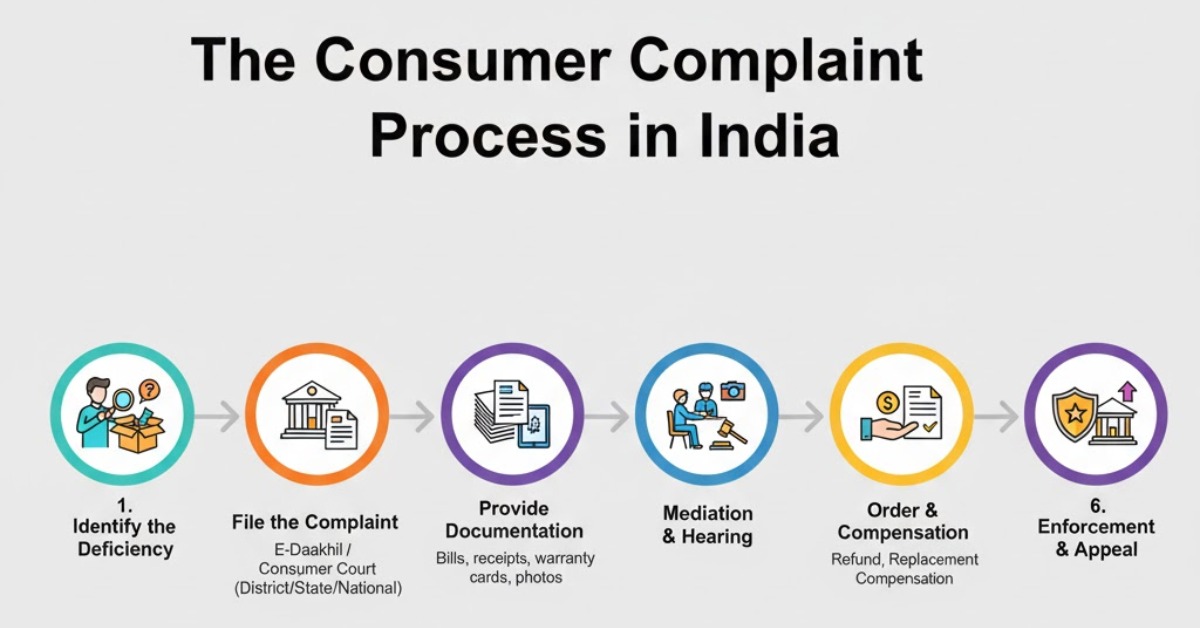
Consumers can file complaints through online and offline channels. The consumer complaint process is simple and accessible:
- Identify the Deficiency: The complaint may relate to defective goods, poor service, overcharging, or unfair practices.
- File the Complaint: It can be filed with the appropriate consumer court in India; District, State, or National Commission—depending on the value of the claim.
- Provide Documentation: Bills, receipts, warranty cards, or communication records serve as proof.
- Mediation and Hearing: The court may refer the matter to mediation before proceeding to formal hearings.
- Order and Compensation: : If the complaint is upheld, the forum may order replacement, refund, or compensation for loss or injury.
The government also operates an online platform ; E-Daakhil, that allows consumers to file complaints digitally and track case status, reinforcing online consumer rights in India.
5. Understanding Consumer Courts in India
Consumer courts in India are structured across three tiers:
- District Commission: Handles complaints where the value of goods or services is up to ₹1 crore.
- State Commission: For claims between ₹1 crore and ₹10 crores.
- National Commission: For disputes exceeding ₹10 crores.
These quasi-judicial bodies ensure quick and affordable consumer dispute resolution, reducing dependency on regular civil courts. Orders of the consumer commissions are enforceable and appealable, ensuring procedural fairness.
6. Online Consumer Rights in India
E-commerce has brought convenience but also new risks such as fake products, delayed deliveries, and misleading digital advertisements. The Consumer Protection (E-Commerce) Rules, 2020 protect online consumer rights in India by mandating:
- Clear disclosure of return, refund, and warranty terms.
- Transparent pricing and origin of goods.
- Prohibition of cancellation charges unless imposed on sellers.
- Appointment of grievance officers for online platforms.
These provisions strengthen digital consumer protection law India and ensure that rights extend uniformly across both offline and online markets.
7. Redressal through Consumer Grievance Mechanisms
Effective consumer grievance redressal is central to enforcement. Consumers may:
- Approach the seller or service provider directly.
- Contact the Consumer Helpline (1915) or the National Consumer Helpline portal
- File a case through consumer court India or E-Daakhil.
- Participate in mediation for faster settlement.
This framework promotes accessible justice and reinforces consumer awareness in India about available remedies.
8. Common Consumer Issues and Remedies
Frequent consumer complaints include delayed deliveries, defective products, non-refunds, and false advertisements. The Consumer Protection Act 2019 provides remedies such as
- Refunds or replacement of defective goods.
- Compensation for losses or mental agony.
- Penalties against misleading advertisements.
- Suspension of unfair business licenses.
Thus, the rights of a consumer in India protect not only buyers but also uphold ethical business standards.
9. Importance of Consumer Awareness in India
Despite robust laws, consumer awareness in India remains crucial. Many individuals are unaware of their legal rights as consumers or hesitate to file complaints. Public campaigns, educational programs, and online tools have been launched to inform citizens of their rights and available legal recourse.
When consumers assert their rights, it creates market accountability and fosters fair trade practices.
Conclusion
The rights of a consumer in India reflect the constitutional promise of justice and equality in the marketplace. Governed by the Consumer Protection Act 2019, the law empowers individuals to challenge unfair trade practices, defective goods, and digital frauds through accessible forums like consumer courts in India.
Every citizen must understand and exercise their consumer rights in India, from the right to safety and information to the right to redressal. As consumer awareness in India grows, so will the culture of fairness and transparency in commerce.