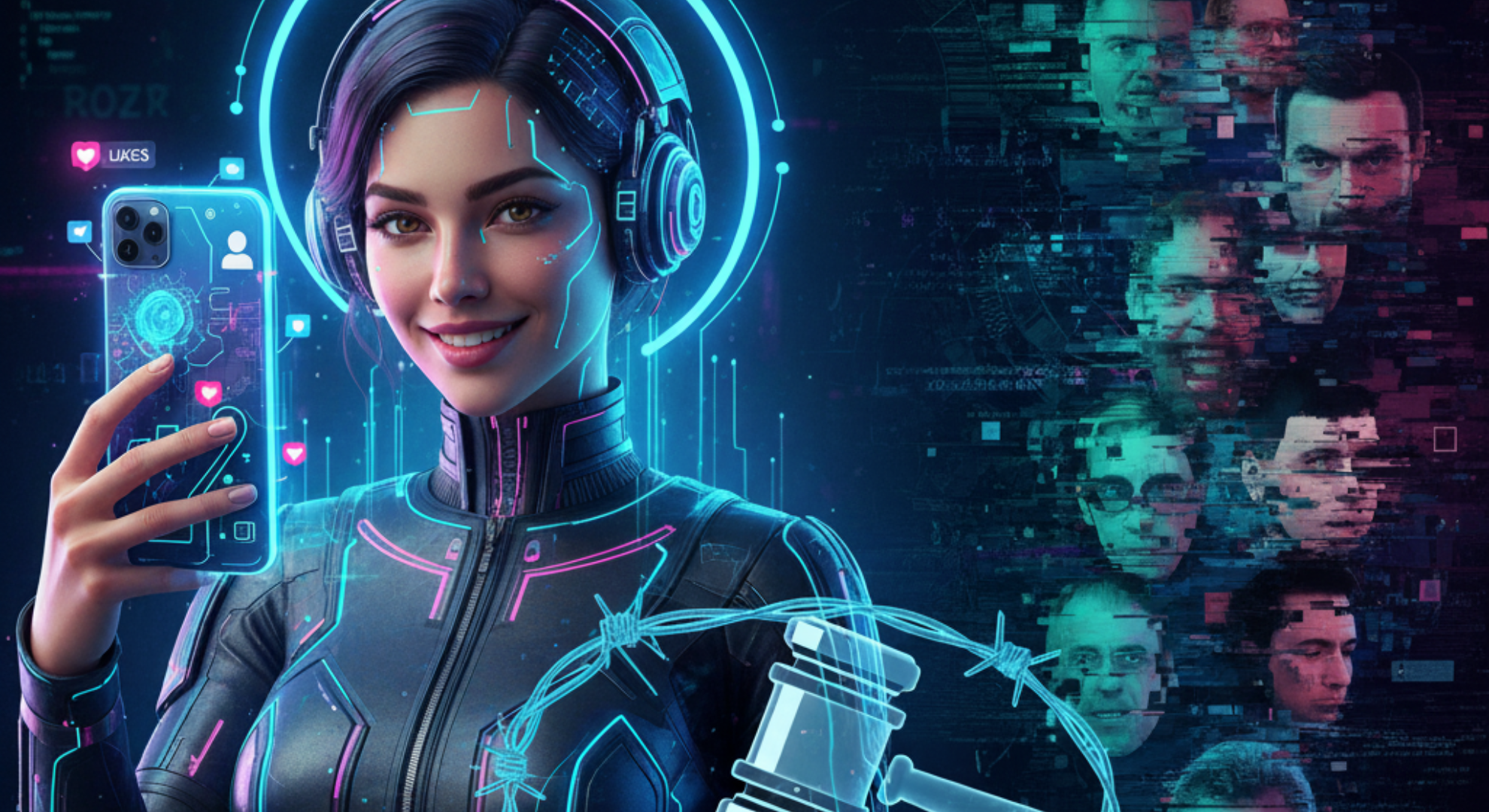
AI-Generated Influencers & Deepfake Concerns: The Legal Frontiers for Creators in 2025
In 2025, artificial intelligence (AI) has redefined what it means to be an influencer. Virtual personas powered by generative AI—complete with lifelike voices, realistic faces, and human-like personalities—are now running major marketing campaigns. From fashion to fintech, AI-generated influencers are becoming a new face of brand storytelling.
But as the line between real and virtual blurs, deepfake technology and AI impersonation have raised urgent legal and ethical questions. Who owns an AI persona? What happens if a deepfake damages someone’s reputation? And how can creators ensure their digital content stays compliant with global laws?
Let’s explore how this new frontier is reshaping influencer marketing—and what every creator should know about the legal landscape in 2025.
1. The Rise of AI-Generated Influencers
AI-generated influencers are digital characters built entirely by artificial intelligence—often powered by text-to-image, voice synthesis, and machine learning tools. Some of the most popular examples include Lil Miquela, Imma, and India’s first AI influencer Kyra. These digital personas engage audiences, sign brand deals, and post daily just like human creators—only without fatigue, controversy, or inconsistency.
Brands love them for their control, cost-efficiency, and adaptability. However, regulators are now closely examining how these synthetic personalities are marketed, disclosed, and managed.
2. Deepfakes and the Challenge of Authenticity
Deepfakes—AI-generated videos or images that realistically depict people doing or saying things they never did—pose the greatest legal challenge. What started as creative experimentation has evolved into a serious reputation and privacy threat.
Misusing AI to clone an influencer’s face, voice, or likeness without consent is now a growing concern. Fake brand endorsements, manipulated videos, or impersonated collaborations can mislead audiences and damage both brand and personal credibility.
Governments across the globe are now introducing deepfake-specific laws to combat misuse:
- India’s Digital India Act (proposed 2025) includes stricter penalties for AI impersonation and deepfake-related fraud.
- The EU’s Artificial Intelligence Act (AIA) requires clear labeling of AI-generated or synthetic media.
- The U.S. Deepfake Accountability Act mandates disclosure whenever synthetic likenesses are used in advertising or entertainment.
3. Legal Ownership of AI Influencers
Who owns an AI influencer—the coder, the designer, or the brand?
That’s one of the biggest
unanswered questions in digital law.
Under traditional copyright laws, ownership is tied to human authorship, but AI-generated creations don’t have a legal “personality.” In 2025, many countries, including India, the UK, and the U.S., are revising intellectual property laws to define AI co-authorship or ownership by the developer/brand.
Creators working with AI tools should:
- Clearly define ownership clauses in contracts
- Avoid using AI models trained on copyrighted materials.
- On YouTube or podcasts, disclosures must be spoken verbally and displayed on screen.
- Keep documentation showing the extent of human input during creation.
This ensures protection against future disputes over rights, licensing, or royalties.
4. Disclosure and Transparency Rules
Just like human influencers must disclose sponsorships, AI-generated influencers must now declare their artificial nature to viewers. Transparency is key to maintaining consumer trust.
The EU AI Act, for example, mandates that any AI-created or manipulated media must clearly indicate that it’s artificial. Similarly, ASCI’s influencer guidelines in India are expected to extend to virtual creators, requiring labels such as:
- “Virtual Influencer”
- “AI-generated Character”
- “Synthetic Content”
Failure to disclose could lead to regulatory penalties, loss of platform credibility, or brand termination.
5. Deepfake Misuse: Legal and Ethical Implications
When deepfake content is used maliciously—such as creating fake endorsements, defamation videos, or sexually explicit material—it crosses into criminal territory.
Legal consequences now include:
- Impersonation penalties under IT and cyber laws.
- Civil damages for defamation, privacy invasion, or loss of reputation.
- Brand liability if a company benefits from unauthorized AI-generated content.
For example, in 2024, several global brands faced backlash after using AI-generated models resembling real people without consent. This prompted regulators to introduce “digital likeness rights”, protecting individuals from unauthorized synthetic replication.
6. Ethical Responsibility in AI Influencer Marketing
Beyond compliance, creators and marketers must uphold ethical transparency. Audiences increasingly value authenticity, even in AI-driven worlds. Misleading them with ultra-realistic synthetic personas can backfire, eroding trust.
Best practices for 2025:
- Always label AI-generated characters as synthetic.
- Avoid copying real individuals’ likenesses.
- Use AI ethically—no deceptive endorsements or manipulative content.
- Collaborate only with verified AI content platforms that follow data and privacy regulations.
Ethics isn’t just a moral choice—it’s a business advantage. Transparent creators attract sustainable partnerships and long-term trust.
7. The Future: Regulation Meets Innovation
As AI technology advances, laws will continue to evolve. Regulators are now focusing on:
- AI watermarking and traceability – requiring digital “signatures” for AI-generated content
- Biometric data protection – ensuring facial and voice data aren’t used without consent.
- Cross-border regulation – harmonizing rules for global campaigns.
Creators should stay updated with emerging frameworks like India’s upcoming Digital India Act, the EU AI Act, and FTC’s AI Disclosure Guidelines to ensure compliance across platforms
8. Protecting Your Digital Identity
Human influencers, too, must safeguard their likeness.
Steps to take:
- Register your likeness and brand trademarks.
- Use AI detection and monitoring tools to spot fake clones.
- Add digital watermarks or metadata to protect original content.
- Take immediate legal action if your image or voice is misused.
In a world where anyone can be replicated with a few lines of code, identity protection is the new intellectual property.
Conclusion
The age of AI-generated influencers and deepfakes offers limitless creative potential—but also unprecedented legal complexity. As 2025 unfolds, creators and brands must balance innovation with responsibility.
Being transparent, ethical, and legally compliant isn’t just about avoiding penalties—it’s about building credibility in the next digital revolution. The creators who master this balance will define the future of influencer marketing.